

How two drinks spent four hundred years on opposite sides of an ocean, and why we ended up making both of them at Treguddick.
Histories of drinks are usually told one at a time, which is tidy but misses the point. The interesting thing about the Margarita isn't that tequila existed, or that triple sec existed. It's that both of them had to exist, be reasonably good, and be standing on the same bar at the same moment before anything could happen. It took four centuries and a Prohibition to arrange that. It takes us about ninety seconds, and we'd like to tell you why.
Two plants, two continents, no plan
Somewhere in the highlands of Mexico, a very long time ago, a plant called the agave adopted the strategy of sitting completely still for a decade, storing up sugar, and then dying in a single spectacular flowering. The people around it discovered that if you cut the flower off first, the plant wept a sweet sap that fermented on its own. They called the result pulque and handed it to a goddess for safekeeping. Nobody distilled anything mostly because nobody had a still.
Meanwhile, on the far side of the world, the Persians and the Moors were perfecting the alembic — mostly for perfume, which is a moral lesson of some kind — and oranges were travelling west along the Arab trade routes into Spain. By 1500 one continent had the plant; the other had the still and the fruit. Neither had heard of the other.
Spaniards everywhere
In 1519 Cortés landed in Mexico with an alembic in the luggage. Within a few decades somebody was cooking agave hearts, fermenting them and running the result through a still, and calling it vino de mezcal. In the very same decade, on a small dry island off Venezuela called Curaçao, the same Spanish planted Valencia oranges. The oranges failed magnificently — small, green, and bitter enough to be inedible — and were abandoned.
Then somebody dried the peel in the sun and smelt it.
The Dutch took the island in 1634, shipped the peel to Amsterdam, and the Bols family steeped it in spirit, distilled it, sweetened it and called it curaçao. The first orange liqueur was born from a fruit nobody wanted. By the end of that century both halves of our story existed: a rough agave spirit in a Mexican valley, and a sweet orange cordial in a Dutch warehouse. They would not meet for two hundred and fifty years.
Both drinks get a name
The nineteenth century is where things sharpen up.
In 1834, in the Loire town of Saumur, a confectioner called Combier claimed to have made the first triple sec — a clear, dry orange liqueur, a world away from the syrupy coloured curaçaos of the day. Forty miles downstream in Angers, Édouard Cointreau spent the early 1870s on the same idea and released his Curaçao Blanco Triple Sec in 1875. Nobody has ever satisfactorily explained the "triple," and the two houses are still arguing about who was first. It doesn't matter. The point is that by 1875 someone had worked out that an orange liqueur should taste of orange peel, not sugar.
Two years earlier, in 1873, Cenobio Sauza had sent three barrels of "mezcal of Tequila" north across the border to El Paso, and begun insisting that the spirit of his town, made from one particular blue agave, was a thing apart. In 1902 a German botanist named that agave — Agave tequilana Weber var. azul — and in 1974 the Mexican government drew a legal line around Jalisco and declared that only spirit made inside it, from that plant, could be called tequila.
That last fact is why what we make is called Cornish Agave, and not the other word. It is the same plant, the same cooking, the same fermentation and the same copper still (albeit triple distilled). What it isn't is in Jalisco. We're comfortable with that. Champagne has the same rule, as has the Cornish Pasty, and they have managed perfectly well.
In which everybody goes to Tijuana
The single most important event in the history of the Margarita happened in neither Mexico nor France. In 1920 the United States banned alcohol, and Americans discovered that Mexico was right there. Tijuana and Juárez filled with bars aimed at thirsty Californians and Texans, and behind those bars was tequila, because it was local, and Cointreau, because every bar that had read a cocktail book had Cointreau.
Bartenders of the era all knew the Daisy: spirit, citrus, orange liqueur, shaken. It had been in print since 1862. Make one with the local spirit and you have a Tequila Daisy. Daisy in Spanish is margarita.
So the drink named itself. The people came afterwards and argued about it — Danny Herrera at Rancho La Gloria in 1938, inventing it for a showgirl who was allergic to everything except tequila; Pancho Morales in Juárez in 1942, asked for a Magnolia and forgetting what went in one; Margarita Sames at her Acapulco house in 1948, throwing the best party of the three. Take your pick. By the time Esquire printed the recipe in 1953 it was clearly already everywhere.
Notice what that recipe needs? A tequila of consistent quality, which Mexico had spent eighty years developing. And a dry orange liqueur that tastes of peel, which the Loire had spent the same eighty years perfecting. The Margarita isn't a Mexican drink or a French drink. It's the first drink that could only exist once both had done their homework.
The bad years, and the rescue
In 1971 a Dallas restaurateur adapted a soft-serve ice-cream machine to dispense frozen Margaritas. The machine is in the Smithsonian (best place for it). It is also the moment the drink stopped being a cocktail and became an industry, and the moment the tequila in it became mixto (half agave, half sugar spirit) and the triple sec became 15% syrup with orange flavouring. For twenty years the world's most-ordered cocktail was, mostly, a mediocre one.
The rescue came from bartenders. In the 2000s they insisted on 100% agave spirit, and the blanco — unaged, tasting of the plant — became the connoisseur's choice. They rediscovered that triple sec was supposed to be distilled from real peel and rediscovered the Loire houses that still did it that way. And a scatter of small distilleries around the world began doing both jobs properly again.
We are one of them. Here's what that looks like.
Cornish Agave
Blue Weber agave, cooked, fermented and distilled in copper at Treguddick, and bottled unaged as a blanco because that's where the plant shows best. It is peppery, faintly sweet, with the green, cooked-agave character of melon and cucumber that a good Highlands blanco has and a mixto never will. Sip it. Then put it in a Mule with ginger beer and lime. Then, when you're ready, read on.
[Cornish Agave — 50cl, 40% — £45 — Buy now first batch 50 bottles only]
Blissful Orange
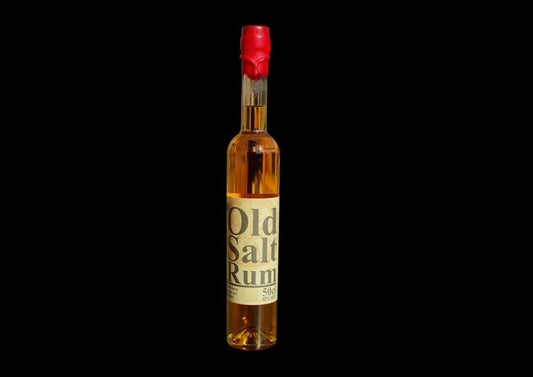
Our triple sec, made the way Édouard Cointreau may have intended and most of the category has forgotten: fresh orange peel and a few other small orange coloured citrus delights, macerated and then distilled through the pot still so that the bright, sharp top notes of the zest come across and the pith finesse is a gossamer sign-off. Sweetened only as far as it needs to be — enough to be deliciously sippable, not enough to hide the fruit. It is a Sidecar, a White Lady and a Cosmopolitan waiting to happen, and it is the other half of the drink below.
[Blissful Orange Spirit — 50cl, 40% — £45 — Buy now]
Together: the Treguddick Margarita
There is a fashion now for the Tommy's Margarita — agave spirit, lime, agave syrup, no orange liqueur at all — on the grounds that a good spirit needs no help. It's a fair point, and a reminder of what the orange liqueur was doing for seventy years: rounding out a rough spirit and lending it aromatics it lacked. But put a proper triple sec back in with a proper blanco and you get something better than either version — the drink as it was meant to be in 1953, before that damned machine.
-
50 ml Cornish Agave
-
25 ml fresh lime juice
-
20 ml Blissful Orange
Shake hard with ice. Serve up, or on ice. Salt half the rim so you get to choose.
Two spirits, one lime, four hundred years. We've shortened the last part.
Both spirits are distilled at Treguddick Distillery, South Petherwin, Cornwall. Cornish Agave is made from 100% Blue Weber agave and is not tequila, which by law must be made in Mexico — a rule we'd defend, since it's the same one that keeps Cornish pasties Cornish.
Cheers,
Dr. J